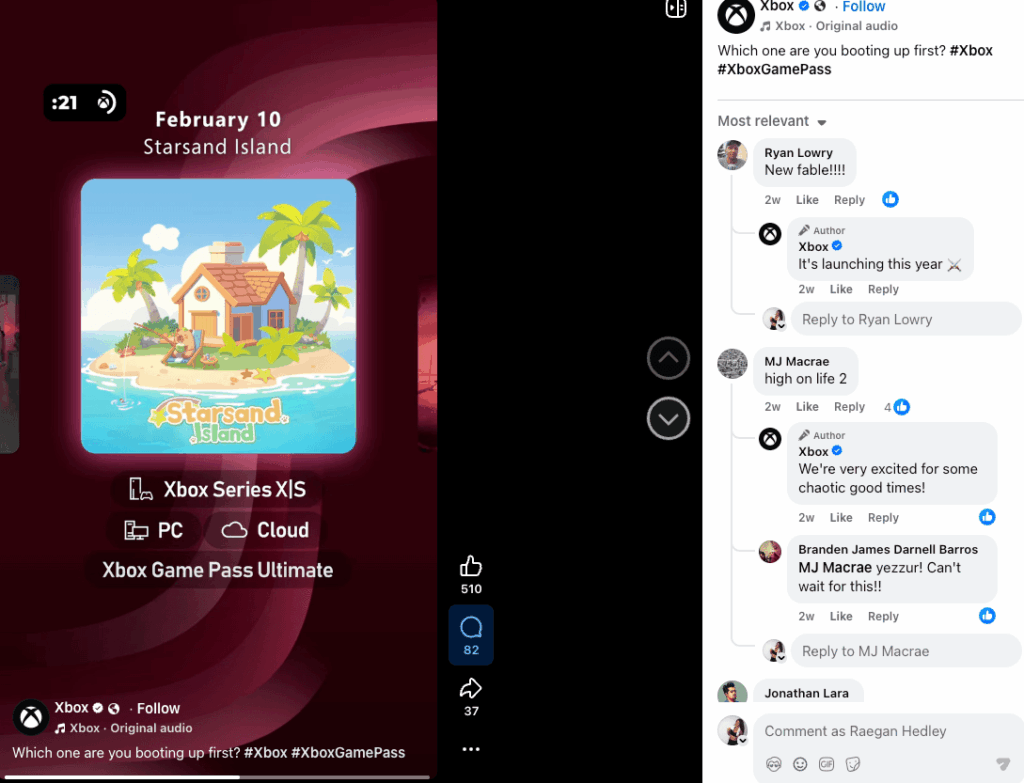
There’s a growing disconnect between the networks and content brands are investing in, and where audiences are actually spending their time and what they want. According to The 2026 Social Media Content Strategy Report, consumers across generations plan to spend more time on Facebook, followed by Instagram and YouTube, but most brands are allocating investments to TikTok and Instagram. And while brands are investing in AI-generated content, consumers say they want more human-generated content, personalized service and meaningful engagement in smaller digital spaces. Mismatches like this dilute trust and drive down engagement. To succeed on social media in 2026, you need to align your investments with business objectives and audience expectations. We’ll share insights on consumer preferences across networks to help guide you in how to prioritize the right social networks for your brand. What you need to know about the top social media networks Before deciding where to invest, it helps to understand which social media networks are dominating consumer attention and adoption in 2026. What are the top social media platforms? The top social networks in 2026 are Facebook, Instagram and YouTube, based on The 2026 Social Media Content Strategy Report. These are the social networks users plan to spend more time on across all consumer demographics. What are the biggest social media platforms? Facebook remains the most widely adopted social network. The 2026 Social Media Content Strategy Report shows that 85% of consumers maintain profiles across generations. Which social media has the most users? Facebook has the largest user base among social media networks, with over three billion active users. However, social network size doesn’t determine strategic value. Each network offers different audiences and benefits for brands. General social media networks: Foundational presence General social media networks are multi-format, multi-purpose and used by broad audiences. They tend to form the foundation of most social strategies. In 2026, these networks continue to deliver reach and business impact, making them smart starting points for brands. They also serve as primary destinations for personalized social media customer service, which is the second biggest priority consumers want brands to focus on, according to The 2026 Social Media Content Strategy Report. 1. Facebook: Leads in product discovery For two decades, users have flocked to Facebook to share content and find products. But in The 2026 Social Media Content Strategy Report, 52% of consumers called Facebook their top network for building community, reinforcing that connection is what keeps people coming back. Facebook’s broad appeal contributes to its popularity. The report shows that 85% of all users have a profile on the network and 39% plan to increase their time spent on Facebook in 2026. Report data also reveals that the network leads in both product discovery and social media customer service, with nearly 40% of users turning to the network to find new products and 45% using it for support. Brand interaction on Facebook spans the full customer journey, which explains why 70% of marketers agree that Facebook drives the greatest business impact. Static posts used to dominate, but the report finds that short-form videos under 60 seconds now deliver the strongest performance on Facebook. Particularly when content blends entertainment with practical value, such as product demos or FAQ-style responses. Xbox frequently posts short videos to spotlight upcoming Xbox Game Pass titles, sparking fan conversation and driving product discovery.
For brands looking to maximize impact across the customer journey, Facebook offers one of the strongest return-on-effort opportunities in social. 2. Instagram: Inspires high-frequency brand interaction Instagram blends visual storytelling with brand interaction, making it one of the most engagement-heavy social networks. It’s the second most popular social network across age groups. The 2026 Social Media Content Strategy Report shows that 65% of social media users have an Instagram profile, and it’s especially popular among younger audiences, with 41% of Gen Z consumers planning to use Instagram more in 2026. While Instagram supports product discovery and customer interaction, the report finds that entertainment is the top reason users engage with brands on the network. This translates into the types of content that social usersare most likely to interact with on Instagram. Short-form video under 60 seconds drives the strongest performance on Instagram, followed by user-generated and influencer content, according to the report. As demand for human-generated content grows, brands that produce original short-form videos are best positioned to compete. Report data also indicates that 60% of users engage with brands multiple times per week, so attention has to be earned repeatedly. In the Sprout Social Q2 2025 Pulse Survey, 57% of users said brands should prioritize original content series, pointing to episodic storytelling as an opportunity. Doritos put this into practice with a series of Instagram Reels featuring its “Chippy” character, turning a fictional Super Bowl production mishap into episodic entertainment that kept people coming back to see the next part.
Instagram is ideal for personality-forward brands, founder-led companies or culturally fluent teams with strong creative pipelines and the resources to produce consistent short-form content. 3. LinkedIn: Continues as a high-conversion B2B engine LinkedIn is a business-first network used to advance career growth and learn about industry insights. Data from The 2026 Social Media Content Strategy Report shows that it attracts 35% of social users and maintains consistent representation across age groups. It’s also the leading network for B2B marketing. LinkedIn generates leads for 62% of B2B marketers, delivers 2x higher conversion rates and a 33% increase in purchase intent compared to other networks. The professional context also positions LinkedIn as a logical support channel. According to the report, 18% of users seek help there, with Baby Boomers and Gen X being most likely to do so. The report also indicates that nearly 70% of users interact with brand content on LinkedIn at least once per week, with over half of users gravitating toward text-based posts. And unlike social entertainment networks, a combined 48% expect educational product information and leadership updates. In the post below, Sprout Social CEO Ryan Barretto outlines the strategy behind Recruit, a new capability in Sprout Social’s Influencer Marketing platform. The text post combines product education with executive perspective, which is exactly the type of leadership-driven content LinkedIn users value most.
LinkedIn almost stands in a category of its own thanks to its ability to target professional audiences. For brands focused on generating leads through authority and insight, LinkedIn remains unmatched. 4. X: Hub for engagement and customer care X (formerly Twitter) is the home of text-based, real-time public dialogue. Of all the networks, X has probably changed the most over the past couple of years. The 2026 Social Media Content Strategy Report found that one-third of all social users across age demographics have an X profile, but Gen Z is most likely to have a profile on the network. Engagement on X is strong, with over half of users (58%) interacting with brands on the network at least once per week, according to the report. As X now caters to a younger demographic, user behavior and content preferences have changed. Users interact with brands on X primarily for entertainment, but also for customer care. The report finds that 18% of consumers name X as their top destination for social customer care. It also highlights that social users are most likely to interact with short-form video (<60 seconds) when engaging with brands on X, followed closely by text-only posts. Younger consumers (especially Millennials) are more likely to engage with influencer content on X, which is an opportunity some brands like Wendy’s are making the most of. Wendy’s partnered with Connor Wood (@fibulaa) on a short-form video that infused its “Tendy’s” campaign with humor and cultural relevance.
Interactions unfold publicly on X, giving brands that are confident in their voice and prepared to respond quickly an advantage. Social entertainment networks: Capturing the “video-first” audience Social entertainment networks are built around video content. From short-form video to long-form storytelling, these networks serve to entertain, inform and inspire. Content on these networks is surfaced through personalized algorithms and searchable content libraries, making them social media search engines. Users come to these networks to find products and learn from creators and brands. 1. TikTok: The primarysearch engine for Gen Z TikTok is primarily an entertainment network, but because the TikTok algorithm recommends content based on interest and behavior, it’s also used for discovery. The 2026 Social Media Content Strategy Report shows that half of all social users have a TikTok profile, but that number goes up to 72% for Gen Z. And among those users, engagement is high. The report shows 44% of Gen Z users and 37% of Millennial users interacting with brands on TikTok multiple times a day. And that interaction could increase in 2026, since 39% of Gen Z consumers plan to use TikTok even more. For Gen Z, TikTok is the top channel for product discovery, with 49% using it to find new products, according to the report. And The 2025 Sprout Social Index™ said 36% of consumers use TikTok to make purchases, ranking it the second most popular destination for direct purchases. The report finds users come to TikTok for entertainment in the form of short-form vertical video, followed by long-form and user-generated content. The State of Influencer Marketing Report shows that 27% of Gen Z engage with influencers on TikTok, compared to 15% overall, indicating that creator-led content is key to driving engagement on the network. Scrub Daddy frequently blends entertainment with product demonstrations. The video below uses popular TikTok hashtags, like #cleantok and #cleaningtiktok, trending audio and a meme-style caption to draw people in while naturally showing how the product works.
With 71% of marketers increasing investment in 2026, TikTok leads all networks in planned spend according to the report. Brands that want to reach Gen Z should treat it as a core channel. 2. YouTube: The shift toward short-form and product discovery Once defined by long-form video, YouTube is now balancing short-form engagement with its role as the world’s second-largest search engine. YouTube continues to hold broad appeal. According to The 2026 Social Media Content Strategy Report, 63% of social users maintain profiles on the network and 30% plan to use it more often in 2026. While the scale is appealing, what makes this network valuable is how users engage. The report finds nearly a quarter of users find new products on YouTube, and consumers are almost as likely to seek product education as entertainment. That blend of curiosity and consideration makes YouTube effective for brands looking to capture attention and guide purchasing decisions in one place. It’s also one of the few networks where having a brand presence is welcome. Consumers are least likely to say they want brands to stay away from YouTube, helping explain why 56% of marketers plan to increase their investment in the network in 2026, per the report. When interacting with brands, consumers are slightly more likely to watch short-form video (<60 seconds) than long-form (>60 seconds), suggesting that the popularization of YouTube Shorts has shifted how consumers engage. In practice, short-form drives visibility, while long-form supports education and conversion. Take Apple’s long-form “Can’t Decide Guide,” where an Apple Specialist walks viewers through the differences between iPhone 17 models. It shows how you can meet your audience at the point of consideration with product education.
Because users turn to YouTube with intent, its content continues to surface through search over time, making it a smart investment for brands focused on sustained visibility. Community-driven networks: Where brand trust is built Community-driven social networks center on conversations within interest-based groups, where users connect on shared questions, experiences and goals. The Q2 2025 Pulse Survey found that 51% of global social users plan to spend more time on community-based networks like Reddit. At the same time, 48% expect to increase their use of emerging networks such as Bluesky and Threads. As users seek more meaningful interactions online, attention is shifting toward these community-driven spaces. Brands need to participate with intention to make the most of them. 1. Reddit: Drive engagement and explore brand insights Reddit is made up of topic-based communities where people ask questions, share experiences and look for advice. That culture tends to attract a younger audience, with Millennials and Gen Z making up the majority of users, per The 2026 Social Media Content Strategy Report. The culture also means that contribution needs to be a key part of any Redditmarketing strategy. The report shows users want brands to provide customer service and support (21%) and share educational product information (16%). On the flip side, 14% of users don’t want brands on Reddit at all, so taking up space strategically is the name of the game. Engagement on Reddit also reflects its culture. When interacting with brands on Reddit, the report indicates 54% of users are most likely to engage with user-generated content, followed by brand comments in user and brand-moderated subreddits. To illustrate, when a user in r/Duolingo celebrated a 1,000-day streak and asked about a free plushie, a verified staff account responded in the thread with excitement and invited them to DM.
Even if Reddit isn’t part of your publishing strategy, it’s a social media intelligence goldmine. Its 100,000+ subreddits contain candid customer conversations you’re less likely to see on other networks. Sprout Social Listening, powered by Trellis, turns Reddit conversations into actionable intelligence to help you validate messaging, inform business decisions and provide leadership with a clearer view of market perception.
If your brand has complex products or a highly engaged community, Reddit would be a good network to invest in. But to make the most of it, you need the resources to deliver tangible value through support, education and selective participation. 2. Bluesky: Build on niche communities Bluesky is a newer network that gives its users control over their feed and data ownership. Bluesky is text-based, but it acts more like a network of niche communities rather than a public forum. Since Gen Z and Millennials are most likely to drive the adoption of new or emerging social networks, it’s no surprise that Bluesky’s primary audience is Gen Z and Millennials. The 2026 Social Media Content Strategy Report shows that 65% of consumers interact with brand content at least once a week. And according to the Sprout Social Q3 2025 Pulse Survey, 51% of users are motivated to use Bluesky over similar networks because they can control the content in their feeds. The same survey also found that 39% of consumers are more likely to interact with brands on Bluesky because it offers content control and doesn’t have traditional advertising in place. The report also finds Bluesky users are most likely to engage with text-based brand posts (45%), followed by short-form video, static images and user-generated content. Here’s an example from American Bird Conservancy that shows how educational and text-forward content can look on Bluesky.
For mission-driven or education-focused brands, Bluesky offers an opportunity to build trust and credibility within niche communities through text-led engagement. 3. Threads: Grow your base for educational product information Threads is a conversation-focused network where engagement is largely driven by participation. It has a cross-generational audience, with Millennials, Gen Z and Gen X all actively participating on the network. On Threads, 31% of users interact with brand content at least once a week. Among those users, entertainment is the top priority (28%), followed by educational product information (15%) then influencer partnerships (14%), according to The 2026 Social Media Content Strategy Report. Taken together, these preferences present a strategic opportunity to combine product education with entertaining and culturally relevant content. This is backed up by findings from last year’s content strategy report, which show that 66% of social users say edutainment is the most engaging type of brand content. The 2026 Social Media Content Strategy Report also revealed that text posts and short-form videos perform best, particularly when they tap into cultural moments and invite conversation. One way for brands on Threads to do this is to interact with other brands, which often leads to stronger visibility in the feed. In the example below, Grammarly delivers writing advice wrapped in a funny observation, offering a simple way to approach edutainment.
Take note: Threads works best when product education is delivered through conversation, humor and timely cultural participation. New social media networks to explore for your brand As audiences experiment with new spaces in 2026, brands have an opportunity to show up early. Here are a few other social networks worth watching:
Substack: The creator-led publishing network that blends newsletters with communitytools like comments and subscriber chats. Ideal for brands investing in owned audiences and thought leadership. Check out Sprout’s Substack, Social Futures, as an example. Rednote: The Chinese social and e-commerce network that’s been called “a combination of TikTok and Instagram.” Since it’s mostly used for sharing lifestyle tips, it’s particularly influential in commerce and trend forecasting. Retro: An ad-free photo app that’s taking aim at social media saturation by inviting users to post a weekly recap intended for close friends. Airbuds: A music-sharing app where users connect through listening habits. A space for hyper-specific interest communities. Lemon8: A visual-first lifestyle network that blends elements of Instagram and Pinterest, with strong product discovery potential.
Interest in networks like these is steadily increasing. The Q2 2025 Sprout Pulse Survey revealed that 41% of global social media users will spend more time on creator-driven networks such as Substack and Patreon. That said, having a first-mover advantage only delivers value when the network fits your audience and brand. A 3-step strategy framework to choose the most effective network Now that you’ve seen the data on the most popular social media networks, we’re here to help you choose the ones that will be most effective for your brand. This framework outlines how to narrow your focus with confidence. 1. Audit business priorities beyond marketing Social media is most valuable when goals ladder up nicely to the company’s overall goals. If you limit your focus to just your marketing team, you might miss opportunities to make a bigger impact. For example, let’s say you work with a B2B brand that’s primarily focused on conversions in its marketing efforts. If you prioritize based solely on that goal, you might spend all your time on networks that drive a lot of clicks. Your product team, on the other hand, might be focused on improving customer satisfaction (CSAT) scores. If you don’t take the product team’s goals into account, you might end up ignoring networks that provide valuable customer feedback through support requests or community discussions. By paying attention to this feedback, you can work together with your team to increase social influence within your organization. Social media can affect many areas of a business. That’s why you want to understand priorities at different levels within the organization before choosing which networks to focus on. 2. Map audience behavior with social intelligence Successful strategies strike a balance between business objectives and audience behaviors. Focusing too heavily on one at the expense of the other can lead to a strategy that misses the mark. To determine where your audience is currently spending their time, you should combine consumer research—like the stats mentioned in this article—with your historical performance data. Use a social media management tool to identify which profiles are generating the highest impressions and engagement. If you’re using Sprout Social, you can find this information in the Profile Performance Report.
This report will provide you with a high-level aggregation of analytics so you can get a pulse on the performance of your social profiles. If certain profiles consistently outperform others, now is the time to dig into why. 3. Perform a competitive gap analysis Your last step in the research process is conducting a competitive analysis. By taking a closer look at the social media strategies of your top competitors, you can find valuable insights that you might have missed when focusing solely on your efforts. Social media is an incredible resource for competitive intel. Marketers often tap into social data to assess customer loyalty and pinpoint the strengths and weaknesses of their competitors’ offerings. If you see your competitors thriving on a particular channel, it’s a strong signal that it’s worth exploring your presence there, too.
If you want to dive deeper into your analysis, consider using a social listening tool. With Sprout’s Social Listening capabilities, you can create Competitive Analysis Topics and break down the data by specific Themes. This way, you can see which topics and themes are resonating most with audiences. Choose social media networks strategically in 2026 You don’t have to be on every social network to get strong results from your social media strategy. Invest in thenetworks that align with your audience and objectives, and show up in ways your audience is asking for. When you do, your content will perform better, and your impact will grow. For a deeper dive into the data, check out The 2026 Social Media Content Strategy Report. The post How to choose the right social media networks for your brand in 2026 appeared first on Sprout Social.