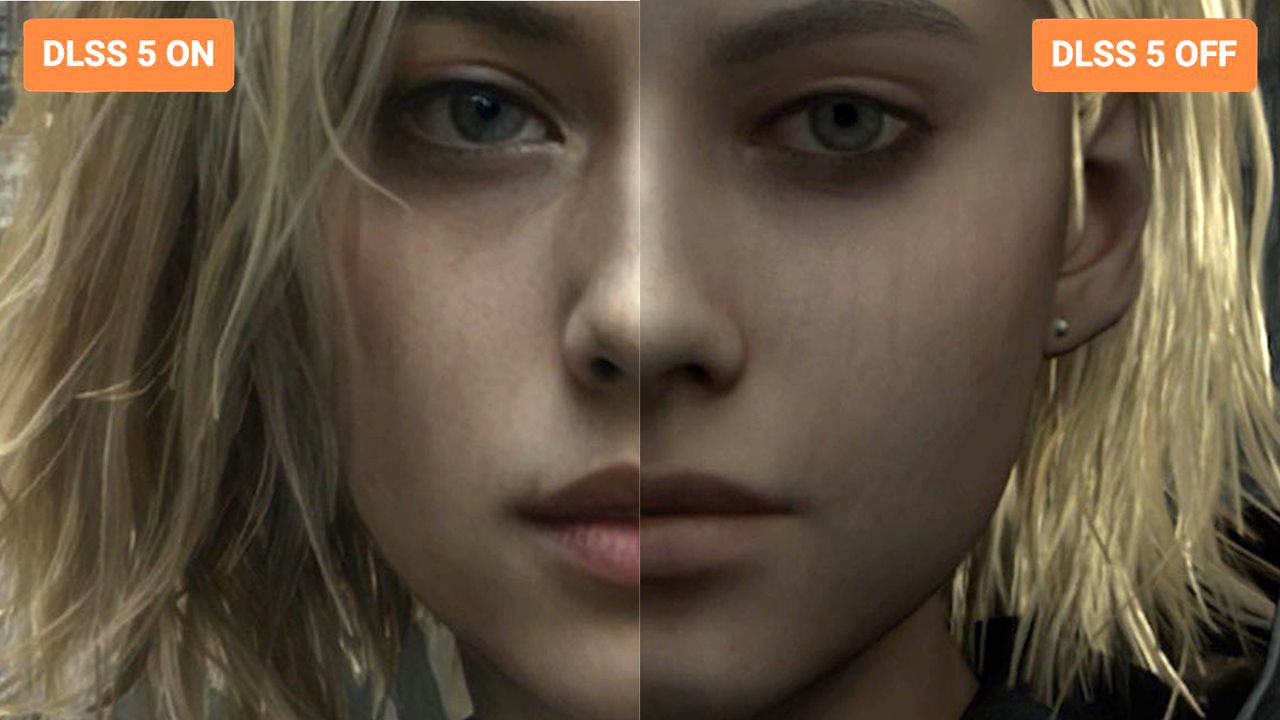
DLSS 5 is Nvidia’s Boldest Graphics Leap Yet, and Its Most Controversial
Nvidia's Deep Learning Super Sampling, or DLSS 5, represents a monumental shift in game graphics. It's a technology that promises to redefine visual fidelity and performance. However, it also sparks a fierce debate: is this the future of game graphics, or the end of artistic control? We explore both sides of this pivotal advancement.
What is DLSS 5 and How Does It Work?
DLSS 5 is the latest iteration of Nvidia's AI-powered upscaling technology. It uses advanced neural networks and deep learning to boost frame rates dramatically. The core idea is to render games at a lower resolution and then use AI to reconstruct a high-resolution image.
This process allows for smoother performance without a massive hardware cost. Gamers can experience ultra settings and high resolutions that were previously unattainable. It’s a clever software solution to a traditionally hardware-bound problem.
The Technology Behind the Magic
At its heart, DLSS 5 leverages tensor cores found in Nvidia's RTX GPUs. These specialized cores are designed for AI computations. They analyze multiple frames and motion vectors to predict and generate pixels.
The AI is trained on a supercomputer using extremely high-quality images. It learns to fill in details and sharpen textures that aren't present in the lower-resolution source. The result is an image that often looks comparable to, and sometimes even better than, native resolution.
The Promise: A Graphics Revolution
For gamers, the benefits of DLSS 5 are immediately tangible. The most significant advantage is the massive performance uplift. Players can enjoy buttery-smooth frame rates at 4K resolution with ray tracing enabled.
This technology effectively future-proofs your graphics card. A mid-range GPU can suddenly handle games designed for much more powerful hardware. It makes high-end gaming more accessible to a broader audience.
The visual enhancements are also a key selling point. In some cases, DLSS 5 can improve image quality over native rendering. It can add stability, reduce flickering, and enhance fine details through its AI-driven sharpening.
Unmatched Performance: Dramatically higher FPS for a smoother gaming experience. Increased Accessibility: High-fidelity gaming without the need for the most expensive hardware. Superior Image Quality: AI-enhanced details can surpass traditional rendering in specific scenarios.
The Controversy: The Cost of Control?
Despite its benefits, DLSS 5 is not without its critics. The primary concern revolves around artistic integrity. When an AI reconstructs an image, it is interpreting the developer's original vision through an algorithm.
This raises a crucial question: who is the real artist? Is it the game's developers, or is it Nvidia's AI? There is a fear that a standardized AI process could lead to a homogenization of visual styles across different games. Much like the debate in film and video game fan art, it challenges traditional definitions of creative ownership.
Another issue is the inherent loss of precision. The AI is making educated guesses to create pixels that never existed. In some instances, this can introduce artifacts, strange textures, or a "processed" look that deviates from the intended art direction.
Performance vs. Purity
The debate often boils down to a trade-off between performance and purity. Purists argue that playing at native resolution, while more demanding, is the only way to experience the game as it was meant to be seen. They view AI upscaling as a necessary but imperfect compromise.
Proponents, however, see it as an essential evolution. They argue that the visual differences are often negligible during gameplay. The benefit of a vastly improved frame rate provides a better overall user experience, which is a crucial business and user advantage in the modern digital landscape.
Looking Ahead: The Future of AI in Gaming
DLSS 5 is just the beginning. AI's role in game development and rendering is set to expand exponentially. We can expect more advanced reconstruction techniques and even AI-generated assets in the future.
This progression mirrors a larger trend in software, where intelligent features are becoming standard. However, it also brings new challenges for consumer rights and transparency, an issue highlighted by cases like the recent Adobe settlement over cancellation policies. As technology integrates deeper into ourexperiences, clear communication and user choice become paramount.
The industry will need to find a balance. The goal should be harnessing AI's power to enhance games without overshadowing the creative humans behind them.
Conclusion
DLSS 5 is a powerful, transformative technology that sits at the center of a complex debate. It offers incredible performance gains but also forces us to reconsider the boundaries of art and automation in gaming. Whether you embrace it for its power or critique it for its implications, its impact is undeniable.
What's your take on AI-driven graphics? Is it the future, or a step too far? Share your thoughts and explore more cutting-edge tech insights on Seemless.