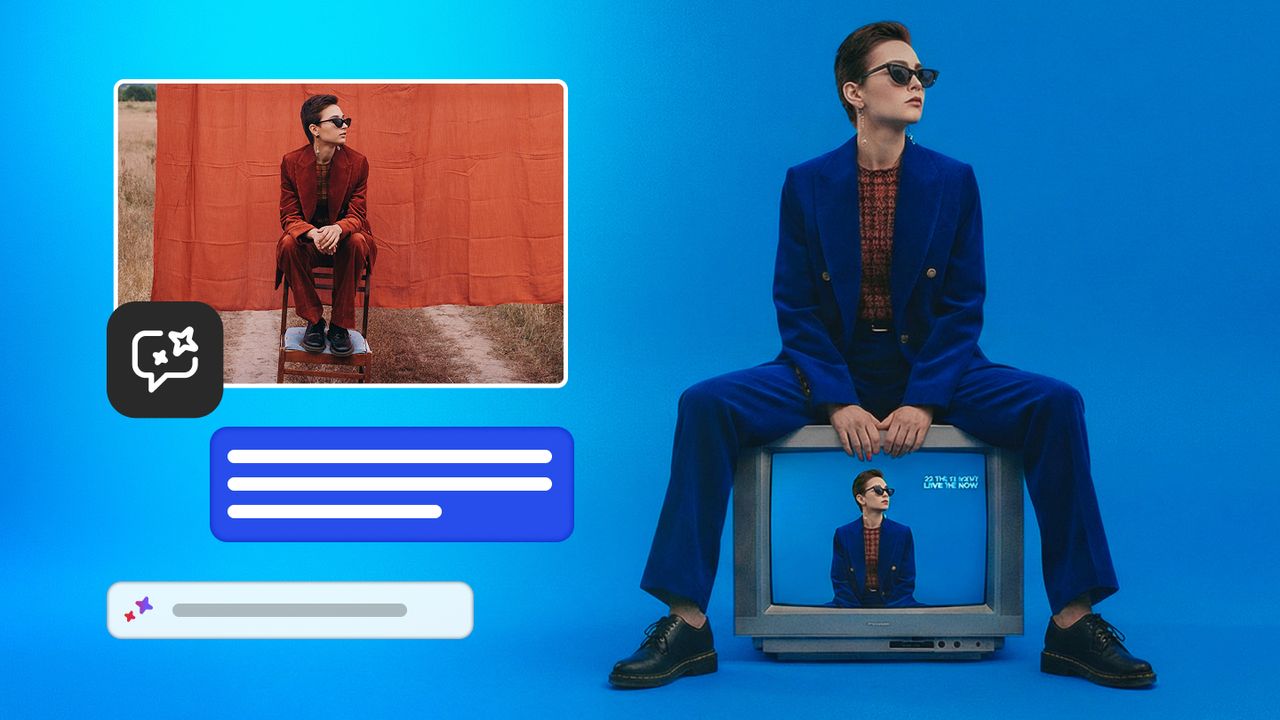
Photoshop's AI Assistant Is Now Live: A Game Changer?
Adobe has officially launched its highly anticipated Photoshop AI assistant, marking a significant milestone in creative software. This powerful tool promises to revolutionize workflows for designers and photographers alike. But the big question remains: is this new feature genuinely helpful, or is it just another tech gimmick?
We're diving deep into the capabilities of this new AI to see if it lives up to the hype. From automated edits to complex generative fill, the potential seems enormous. Let's explore how it performs in real-world scenarios.
What Can Photoshop's AI Assistant Actually Do?
The new AI assistant is packed with features designed to save time and boost creativity. It integrates directly into the familiar Photoshop interface, making it accessible for users of all skill levels. The core functionalities are impressive and varied.
You can use it for simple tasks like removing unwanted objects from a photo with a single click. It also excels at more complex operations, such as extending backgrounds or generating entirely new image elements. The AI analyzes your content to provide context-aware suggestions.
Key Features and Tools
The assistant boasts several standout tools that are worth highlighting. These are the functions that will likely become daily drivers for creative professionals.
Generative Fill: Expand images or create new content seamlessly based on text prompts. Object Removal: Effortlessly erase distractions from your compositions. Style Transfer: Apply artistic styles from one image to another with remarkable accuracy. Auto-Color Correction: Intelligently adjust color balance and tones for a polished look.
Real-World Testing: Helpful or Hype?
To truly gauge its usefulness, we put the Photoshop AI assistant through a series of practical tests. We used it on various projects, from quick social media graphics to detailed photo retouching. The results were a mix of astounding successes and occasional frustrations.
For straightforward tasks, the AI performed exceptionally well. Removing a person from a busy street scene was instantaneous and left no artifacts. It handled color correction on a poorly lit portrait with a level of precision that would take a human editor much longer.
Where It Excels
The AI's strength lies in its speed and consistency for repetitive or tedious jobs. It dramatically reduces the time spent on manual selections and painstaking brushwork. This allows artists to focus on the creative aspects of their projects.
Generative Fill, in particular, opens up new possibilities for ideation and exploration. You can quickly mock up concepts without sourcing stock imagery. It's like having a creative partner that can visualize your ideas instantly.
Current Limitations
However, the tool isn't perfect. On complex images with fine details, the AI sometimes struggles. It can generate plausible but incorrect textures or misinterpret the context of a prompt.
You still need a critical eye to review its outputs. It's an assistant, not a replacement for skill and judgment. Understanding traditional Photoshop techniques remains essential to guide the AI and correct its mistakes.
Integrating AI Into Your Creative Workflow
Adopting this new technology requires a shift in how you approach design. The key is to view the AI assistant as a powerful augmenting tool. It works best when you have a clear vision and use the AI to execute specific parts of it.
Start by incorporating it into smaller tasks to build confidence. Use it for background extensions or quick object removal before tackling more ambitious generative projects. This gradual integration helps you learn its quirks and capabilities.
Best Practices for Optimal Results
To get the most out of the AI, follow these simple tips. They will help you achieve better and more reliable results from your prompts.
Use clear and descriptive text prompts for generative tasks. Make precise selections to give the AI clear boundaries to work within. Always work on a duplicate layer to preserve your original image. Review and refine the AI's output; don't accept it blindly.
This technology is reminiscent of how other tools are evolving to empower creators. For instance, the detailed world-building in this solo dev's cosy game shows how automation can enhance artistry without replacing it. Similarly, the AI in Photoshop is a tool for amplification.
The Future of AI inCreative Software
The launch of Photoshop's AI is just the beginning. We can expect these tools to become smarter, faster, and more integrated. Adobe is likely to expand these capabilities across its entire Creative Cloud suite.
This shift mirrors broader trends in technology, where AI is becoming a core component. Just as XBox Project Helix suggests the 'console war' is over, the future of creative software may focus less on features and more on intelligent assistance. The competition will be about who has the most helpful AI.
These advancements make creative tools more accessible to everyone. They lower the barrier to entry for high-quality design work. This democratization is a positive step for the entire industry.
Conclusion: Is It Genuinely Helpful?
After extensive testing, the answer is a resounding yes. Photoshop's AI assistant is genuinely helpful for a wide range of tasks. It significantly speeds up workflows and handles tedious jobs with ease.
While it has limitations, its benefits far outweigh its current flaws. It's a valuable addition to any creative's toolkit. As the technology improves, its impact will only grow.
Ready to streamline your design process? Explore how Seemless can integrate with these new AI tools to enhance your projects further. Check out our platform to see how we're building the future of creative collaboration. For more insights on innovative technology, don't miss our Monster Hunter Stories 3 review which explores another facet of digital creativity.